
Southern Africa's untapped cruising potential: a new frontier for the global superyacht industry
by African Boating Conference 27 Oct 00:07 PDT
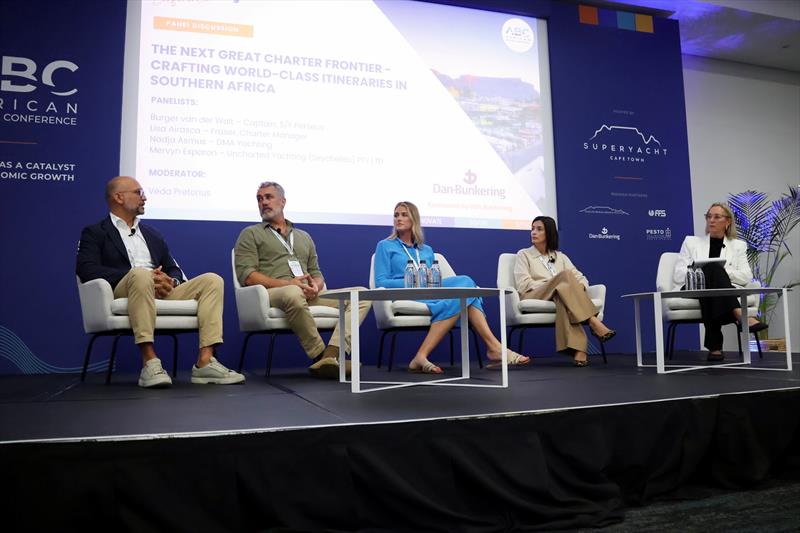
Charter Panel © African Boating Conference
Southern Africa has the natural beauty, extraordinary marine biodiversity, cultural diversity and sense of adventure to become one of the world's most compelling superyacht cruising destinations.
However, unlocking this potential will require greater regional collaboration, clearer charter regulations, improved marine infrastructure and a coordinated approach to international marketing.
These were among the key messages emerging from a panel discussion at the African Boating Conference in Cape Town, where international charter specialists, yacht captains, brokers and regional operators explored what it would take to transform Southern Africa from an occasional stopover into an established cruising and charter destination.
While the Mediterranean and Caribbean remain the traditional centres of the global superyacht charter market, Southern Africa and the wider Indian Ocean region have an opportunity to attract owners and guests seeking more adventurous, less conventional cruising experiences.
Connecting the dots: Developing regional cruising routes
One of the most significant opportunities identified was the development of interconnected cruising routes linking South Africa with destinations such as Mozambique, Madagascar, Mauritius and the Seychelles.
Rather than marketing individual destinations in isolation, industry representatives emphasised the importance of presenting the region as a broader cruising proposition, offering varied itineraries and experiences that could justify the considerable time and cost involved in repositioning a superyacht.
From Cape Town's internationally recognised tourism offering and established marine services sector to the tropical islands, remote anchorages and exceptional marine environments of the Indian Ocean, the region has the ingredients to attract adventurous owners and charter guests.
Veda Pretorius, organiser of the African Boating Conference, believes the opportunity extends well beyond attracting more visiting yachts.
"We need to start thinking about Southern Africa as a connected cruising region rather than a collection of individual destinations," said Pretorius.
"A superyacht owner is unlikely to reposition a vessel thousands of nautical miles for a single week of charter. But if we can develop attractive itineraries that connect multiple countries, supported by reliable infrastructure, clear regulations and exceptional experiences, we have the potential to create an entirely new cruising proposition."
She added that the economic benefits could extend across multiple sectors.
"The opportunity is not simply about having more superyachts in our marinas. It is about the businesses that support them, from marine engineering, maintenance and refit to provisioning, hospitality, tourism, transport and local experiences. A successful cruising route has the potential to distribute economic opportunities across coastal communities and national borders."
From an interesting destination to a viable charter market
Lisa Airasca, Head of Charter Management Europe, Fraser Yachts, highlighted the distinction between a destination that appeals to yacht owners and one that can operate successfully as a commercial charter destination.
Owners need confidence that their vessels can operate legally, safely and commercially, with predictable taxation, reliable local support and sufficient demand to sustain an extended charter season.
Southern Africa's distance from established cruising markets presents a particular challenge. Repositioning a large yacht involves considerable fuel expenditure, crew time and logistical planning.
For owners, the financial case becomes more attractive when a destination offers the potential for an entire cruising season rather than isolated bookings.
"Southern Africa has tremendous appeal as an exploration destination, but owners need certainty before committing their yachts to a new region," said Lisa.
"The key questions are whether the yacht can operate commercially, what regulations and taxes apply, whether suitable infrastructure and support services are available, and whether there is enough potential charter activity to justify the repositioning costs. Developing a connected regional cruising route would make the proposition considerably more attractive."
Lisa emphasised that collaboration between neighbouring countries would be essential to creating a viable regional charter market.
The challenges: Regulation, taxation and infrastructure
Despite the potential, panellists acknowledged that several significant obstacles must be addressed before Southern Africa can compete effectively for international charter business.
Among the most pressing are differing charter regulations between countries, uncertainty surrounding permits and taxation, limited suitable berthing facilities for larger yachts, and the need for reliable support services and safe havens along cruising routes.
The region's sometimes challenging sea conditions, long distances between ports and international perceptions of security also influence decisions made by yacht owners, captains and charter brokers.
Nadja Asmus, DMA Yachting, emphasised that competitive and predictable tax structures are an important consideration.
"Charter clients are accustomed to operating in destinations where the costs, regulations and expectations are clearly understood," said Asmus.
"Southern Africa has an opportunity to learn from established markets and create a competitive environment from the outset. Clarity around taxation and charter permissions will be critical, because uncertainty makes it much harder for brokers to confidently recommend a destination to their clients."
Nadja also highlighted the importance of delivering the same standards of service and professionalism that international charter guests have come to expect in established destinations.
A captain's perspective: Safe havens and practical support are essential
Burger Van der Walt, Captain of the sailing superyacht Perseus, brought an important operational perspective to the discussion, highlighting the challenges of navigating Southern Africa's coastline and the need for dependable marine infrastructure.
Drawing on his experience cruising in the region, including passages from Madagascar towards South Africa, he emphasised that developing a successful superyacht cruising route requires more than attractive destinations.
Captains must know where they can safely berth, obtain technical assistance and access reliable local support, particularly when operating larger vessels.
"When you are cruising a yacht of 60 metres along this coastline, there are very few places where you can safely stop if something goes wrong," said Burger.
"It is not just about having a marina or somewhere to berth. You need to know that the facilities can accommodate your vessel, that there is technical support available and that you have a safe haven if conditions change or you experience a problem. That confidence is essential when planning a cruising itinerary."
He also highlighted the importance of distinguishing between commercial ports and facilities suited to visiting superyachts, noting that large-scale industrial port operations can present practical challenges for yachts.
His comments reinforced the need for strategically located safe havens, dependable shoreside services and accurate information about port capabilities along potential regional cruising routes.
For Southern Africa to develop as an international cruising destination, investment in infrastructure must therefore consider the practical needs of captains and crew, as well as the expectations of owners and charter guests.
The Seychelles example: High value, lower impact
The Seychelles was highlighted as an example of how a destination can position superyacht tourism within a broader strategy of attracting high-value visitors while limiting environmental impacts.
Mervin Esperon, representing Uncharted Yachting in the Seychelles, described the importance of government engagement, industry cooperation and clear policies in developing confidence among international yacht operators.
"One of the most important things we can do is create clarity and consistency between destinations," said Esperon.
"If we can connect the different governments and align the information and procedures that owners, brokers and captains need, we make it much easier for yachts to commit to cruising in the region. We have extraordinary experiences to offer, but the journey must also be practical and predictable."
Remote island exploration, exceptional marine wildlife and access to destinations rarely experienced by conventional tourists were identified as particularly attractive elements of the regional offering.
The discussion also reinforced the potential for superyacht tourism to support a high-value, lower-volume tourism model, provided that development is carefully managed and environmental considerations remain central.
Selling the experience: Why familiarisation trips matter
Another important challenge is ensuring that international charter brokers and yacht managers understand what Southern Africa can offer.
Unlike established destinations, where itineraries and operational arrangements are familiar to the global charter industry, Southern Africa remains relatively unknown as a commercial superyacht cruising region.
Panellists identified targeted familiarisation trips as a practical way to build market confidence.
By inviting international brokers, charter managers, captains and other industry decision-makers to experience destinations first-hand, regional tourism authorities and marine industry stakeholders could begin developing the relationships and destination knowledge needed to generate future business.
Nadja Asmus, DMA Yachting, believes this is an area where collaboration between the public and private sectors could deliver tangible results.
"We cannot expect international charter brokers to sell destinations they have never experienced or do not understand," she said.
"We need to show them what makes our region extraordinary, but we also need to demonstrate that we can deliver the level of service, safety and professionalism their clients expect. Carefully targeted familiarisation programmes could be an important first step in building that confidence."
The panel noted that these programmes do not necessarily need to begin with full yacht-based charter experiences. Destination visits showcasing infrastructure, tourism products, local expertise and logistical capabilities could provide a valuable starting point.
A long-term opportunity requiring a regional vision
Although Southern Africa is unlikely to replicate the Mediterranean or Caribbean charter markets in the near future, its potential lies in developing a differentiated offering centred on exploration, adventure, wildlife, culture and access to remote destinations.
The opportunity is to build a credible alternative cruising region rather than compete directly with established markets on the same terms.
Achieving this will require sustained cooperation between governments, marina developers, tourism authorities, yacht agents, charter companies and marine service providers.
For Pretorius, the most important outcome of the discussion was the recognition that no single country or business can develop the market independently.
The African Boating Conference continues to provide a platform for international and African industry leaders to examine opportunities for marina development, marine tourism, superyacht services and sustainable blue economy growth across the continent.