
The future of antifoul
by Lorraine Yates, White Bay 6 Marine Park 14 Aug 2024 10:43 PDT
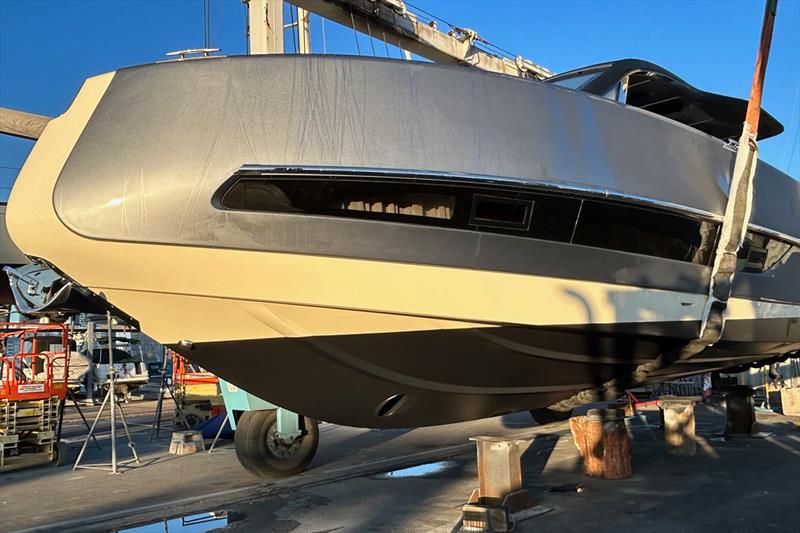
Antifouling - White Bay 6 Marine Park © Marina Industries Association
What is the future of antifoul technology in a world demanding increasingly environmentally friendly and sustainable solutions? Boatyards have a valuable role to play preserving the purity of our beautiful waterways.
Many of us are uncertain about the performance of new, sustainable hull protection systems, and the governing regulation changes that are inevitable. Do these new products provide longer protection, and reduce the number of boatyard visits?
As boatyard operators, we need to be agile, step up to challenges, explore new products and stay on the front foot for all important regulatory changes that will affect the availability of conventional antifouls.
We know that global regulations are tightening, with the emphasis on eliminating volatile organic compounds (VOCs) and reducing biocide leach rates into the ocean.
VOCs are a primary cause of ozone depletion and ocean warming, and it is useful to know just where we sit in our region, compared with other parts of the world in terms of antifoul regulations. The USA specifies a maximum of 330g per Litre (California), while China has imposed a 4% consumption tax on antifoul with more than 420g of VOC per litre. The Australian Government has no upper limit on VOC for antifoul paint - while there are limits for house paint. Our regulators tell us we will follow this trend.
Across the world, there are a whole other range of exciting innovations being developed with the intention of keeping boats clean, reducing the need for harmful chemicals.
These include:
- A drive in boat wash with foul recovery system-becoming popular in Europe;
- autonomous cleaning and inspection robots;
- hull cleaning using bursts of ultrasonic energy by transducer; and
- a paint scheme using UV L.E.D lights, a joint research project by AkzoNobel and Phillips.
Let's also take a look at low VOC, biocide free, silicone-based coatings, widely used in Europe, and currently being trialled in our region. The silicone coating prevents the attachment of micro-organisms such as barnacles, slime, and algae. Fouling is easily removed by wiping it away or water blasting. Other benefits of this slick surface are decreased drag, with of course the added dual benefit of the reduction in emissions as well as fuel savings.
If there is a downside to silicone-based coatings the cautions are that the hull needs to be examined regularly for damage; the boat needs to be moving regularly to prevent barnacles and slime building up; if left to grow to too long the silicone coating is vulnerable to damage. A primary consideration for boatyards is moving a boat with a very slippery surface. That means extra caution is necessary on sling arrangements when planning a lift or, even hardstanding a silicone coated boat to prevent dangerous, unplanned slippage.
In the meantime, our conventional antifouls are getting a workout, particularly on the east coast of Australia and in parts of New Zealand with several very prolific barnacle spawning seasons seeing these products working much harder than ever before. This is a time that boatyards can work closely with our antifoul suppliers who will provide expert advice on localised issues like these. The usual questions apply when we're faced with unexpected marine growth on relatively new antifoul - among these are checking for batch quality, application, the type of fouling, unusual pattern of fouling. Boatyard operators already have extensive local knowledge, and another pair of industry expert eyes can tap into evolving learning from around the region.
This article first appeared in the Marina Industries Association magazine Waterline, July 2024