
National survey highlights critical workforce shortages as marine sector navigates skills crunch
by Boating Industry Association 19 May 13:22 PDT
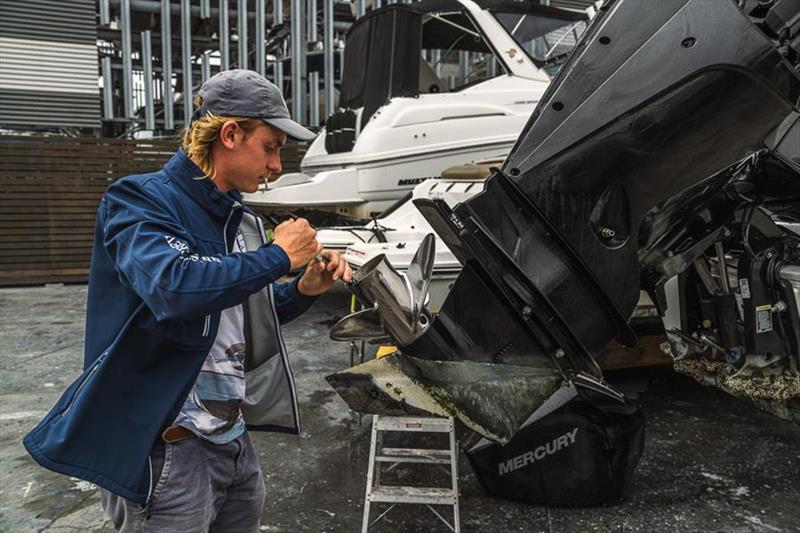
Marine jobs and skills remain in high demand across Australia © Boating Industry Association
More than 90 per cent of Australia's marine industry is deeply concerned about a critical lack of skilled labour, according to the latest data released by the Boating Industry Association (BIA).
The 2026 BIA National Jobs & Skills Survey has laid bare the immediate and long-term workforce challenges facing the recreational boating sector nationwide, revealing that severe shortages are actively impacting the operational capacities and financial performance of marine businesses.
The findings come at a vital time for a sector that is a major powerhouse of the Australian economy. The marine industry generates an annual national turnover exceeding $10.2 billion and employs approximately 35,000 people across more than 2,000 businesses—spanning designers, manufacturers, retailers, marinas and trades.
BIA CEO Andrew Fielding said the results highlight an urgent need for targeted investment in workforce development, education and vocational training.
"The 2026 National Jobs & Skills Survey confirms workforce shortages are no longer just an administrative headache—they are a direct threat to industry prosperity," Mr Fielding said. "When nine out of 10 businesses tell us they are worried about skilled labour and apprentice pipelines, it is a clear call to action."
"Crucially, these shortages are hitting the hip pocket of our members, 75 per cent of whom operate small family businesses. Over half of our industry is suffering direct revenue losses, and nearly half are losing valued customers simply because they cannot find the hands to do the work."
Mr Fielding noted that boating is deeply embedded in Australian culture, with almost 1 in 5 households owning a watercraft and over 5 million people taking to the water each year. "If our businesses cannot build and service vessels, it directly impacts the lifestyle of millions of everyday Australians."
The survey paints a stark picture of the immediate challenges facing marine employers:
- 90.1% of businesses express concern over the lack of skilled labour
- 88.4% are anxious about the widening shortage of apprentices
- 52.1% are experiencing an immediate, direct loss of revenue
- 42.1% are managing ongoing project delays and delivery backlogs.
The immediate demand for technical trade talent remains heavily concentrated in core maritime specialisations. Among businesses seeking to build their trade pipeline right now, Shipwrights and Boat Builders top the list as the most sought-after apprentices at 38.8%, followed by Marine Mechanics (21.5%) and Marine Trimmers (12.4%). These skills are vital to maintaining the national fleet, where family runabouts up to 6m—including the classic 'tinnie'—comprise more than 90 per cent of all registered vessels.
Beyond traditional trades, there is a parallel urgency for general operational capability, with 48.2% of businesses looking to hire non-trade skilled workers and 25.9% seeking sales and marketing professionals.
With 71.9% of marine businesses actively recruiting over the past year, the survey evaluated the efficiency of various employment channels.
Mainstream corporate platforms like Seek maintain the highest footprint with a 70.3% usage rate and a 35.6% employer success rate. However, the specialised, BIA-owned platform Marine Jobs continues to punch significantly above its weight. Used by 35.9% of the sector, Marine Jobs delivered a highly targeted 34.8% success rate, effectively matching Seek's performance at a fraction of the broad-market cost.
The data also confirmed that relationship-driven, localised recruitment remains powerful. Word-of-mouth networks are utilised by 67.2% of businesses and generated a 37.2% success rate, while structured school and college engagement programs achieved an outstanding 37.5% success rate from a 25.0% industry usage rate.
"The data proves that a multi-pronged, targeted approach works best," Mr Fielding added. "While mass-market boards have a role, specialised platforms like Marine Jobs, blended with grassroots school engagement and word-of-mouth, provide the most financially viable pathways to secure the next generation of marine professionals.
"The BIA is a not-for-profit body that reinvests all surpluses back into the growth, safety, and promotion of the boating lifestyle. We remain fully committed to working alongside State and Federal governments, training providers, and our membership base to bridge this gap, protect small family businesses, and promote world-class marine career paths."